
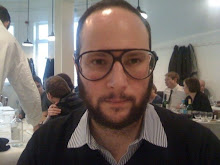
Chemi Rosado presenting El Cerro project at Creative Time Summit, New York


El Cerro in 2001 before being painted as part of Chemi Rosado's project

El Cerro painted green

neighbours of El Cerro painting their houses green

social art workshops

Raimond Chaves community newspaper Hangueando done in 2002

The Museo del Cerro, co-curated by Pablo Leon de la Barra with members of El Cerro in 2002


El Cerro in 2001 before being painted as part of Chemi Rosado's project

El Cerro painted green

neighbours of El Cerro painting their houses green

social art workshops

Raimond Chaves community newspaper Hangueando done in 2002

The Museo del Cerro, co-curated by Pablo Leon de la Barra with members of El Cerro in 2002
Chemi Rosado presenting El Cerro project at Creative Time Summit, New York
http://livestre.am/137pd
Text read by Chemi Rosado:
Good afternoon and thanks for this
invitation. It is an honor to be
surrounded by so many people whose work I admire and to share this microphone
with them. Thanks Creative Time for the invitation, for giving us a voice, and
for allowing us to put together this type of work.
Today,
September 23rd, Puerto Rico commemorates “El Grito de Lares,” a
rebellion which took place in 1868 against the Spanish regime in the Island. To
my dad I dedicate this remembrance.
It
is not a coincidence that, in this same day, we are here at this summit and
that I am presenting The Cerro Project, name of the community were this project
was developed (which means the hill or small mountain). The community or slum areas that form El
Cerro are located in the Naranjito municipality, south of San Juan and to the
west of Bayamón. Bayamón is the municipality with the most extensive (though
unplanned) horizontal urban sprawl in the Island. So there is a great contrast between these
two neighboring towns, and that is part of the experience when visiting El
Cerro.
El
Cerro community was created even before the municipality of Naranjito was
founded, before 1810, by coffee plantation workers and, even today, is
inhabited by the descendants of these workers and a few other families that
have moved here over the years. El Cerro was shaped by the need of the working
class, without formal education; and as many other neighborhoods alike there is
a negative social stigma about these “types” of communities that’s been
supported by the media.
This
project pretends to pay a tribute to the spontaneous architecture development
that the community has created. How they have maintained the topography of the
place were they live and the harmonious way it stands at the side of the
mountains and on top of the town center.
Also to the way, this spontaneous architecture affects their way of
living as neighbors and as families. In the
first few weeks working with the community it shocked me how the majority of
the people went from one house to the other, and nearly everyone’s doors were
open most of the time.
For
me, there are four major aspects that this project has achieved:
1. It’s a Social Active work of art
2. The exchange of knowledge between people
that normally wouldn’t share [artists, guest and volunteers from different
social backgrounds meet, share and learn from each other].
3. An open community for other artistic or
social projects, activities and workshops.
4. And finally it is still a formal or
traditional painting brought to the spectacle of reality.
We
started this project by visiting the people in the community, showing them some
proposals in sketches, drawings, and suggesting the possibility of painting
their houses in different shades of greens for free. Some neighbors told us: “Finally someone is
looking up here; someone wants to do something with us!” Others were skeptical about the project and
about us, asking "Are they from the government?, "do they come from
the police? As for the color, some neighbors would make comments about it right
away: “GREEN!! But this is a mountain already!” Others would joke, saying, “Now the cows will
eat the balconies,” or, would say in a derogatory way: “What will we do on
Thursdays? That’s a gay color to have on that day!”
Another
objection to the color was politics: the color green is linked to the
pro-independence party (blue with the pro-statehood party and red to the
commonwealth party.) That is why painting the first house in the neighborhood
was so significant. It was Ivette
Serrano’s house. Her house was blue. She decided to paint her house because she
thought that the project would help unify the community and bring something
positive for the younger generation, and also because she wanted to help the
artists that pretended to make an art work of the whole community. Some people just said “yes” because their
houses would be painted for free; others preferred to paint with us, while
others would take the paint and do it themselves, as they said: We’ll paint”,
so they painted their houses themselves. I won’t forget to see Cabe and Jossy cleaning
and preparing the exterior of their house in order to paint it. After
finishing, they sat in front of their newly painted house, having some beers
and admiring their work, even the colors, and saying, “This is a work of art.”
Another
great experience for me was when the neighbors themselves went to the lookout
point, the mountain in front of the community,
to watch the progress of the ‘piece’ and started to decide which color would be
used and what houses should be painted next.
From that point on, the project was, in a way, in the hands of the
community or, at least, they were in charge of its direction and logistics.
Since
the first weeks, working in El Cerro we started doing some informal workshops
on Saturdays –that afterwards became a routine and formal events, being the
first making El Cerro T-shirt, were participants from the community would cut
materials to make their own original shirts based on their views of the
community. The workshops, which were given by social workers, artists and
volunteers and other professional such as my mom, Luisa Seijo, were given to
children, teenagers, and people of all ages. Some of the themes were:
“What I like or dislike about El Cerro,”
“Knowing your rights (review of the law),”
“Letting the anger out,” among others.
For this project, I had the support and
collaboration of many, many people and organizations, including the Institute
for Community Development from the University of PR, a complete interdisciplinary class where
students and professors worked closely with residents of the community. And
mostly volunteers who became the 'engine' of the processes, by painting, giving
workshops and as leaders of the project, some of them got really involved in
the community, like Jeanelis, she ended up been teacher in the town and a Resident of El Cerro. Another great volunteer
Bubu Negron is now a well known artist.
Through
the process of painting, the neighbors met and visited one another. In some cases, neighbors that hadn’t visited
each other in 14 years met again while painting each other’s house. Even
neighbors that didn’t talk each other would find a way to communicate again.
Others TOLD me how they were ashamed of living in the community most of their
lives and that now they were proud of being from El Cerro and were able to see
how beautiful their community is. Some would appreciate how we worked letting the kids and teenagers work
closely with us. Even people who didn’t
paint their houses would participate as volunteers and leaders of the project.
The
other important point of the project is how the locals from the barrio are
willing to work in other artists’ projects.
In 2002 Raymond Chavez and Pablo Leon de la Barra came to the community
and became residents for a few weeks. Raymond developed “hanguiando, el
periodico con patas” (hanging-out: the newspaper with legs, or friends, as they
say in Peru). For this project, he had
an office with a scanner, a printer, a voice recorder, computer, and thread
with clips to hang the pages of this open and public newspaper.
Pablo
Leon de la Barra created El Museo del Cerro (el Cerro Museum). By visiting most of the houses of the
community and choosing objects that should be in the communal Museum, he ended
up co-curating the collection of this ‘new’ museum. The actual museum was done in the abandoned
community center, which we cleaned and painted as part of our intervention in
El Cerro. Now, the Center has a roof and air conditioning due to governmental
aid but, mainly, as a result of the community effort in getting what they
deserved and need.
New
leaders have emerged from this barrio. One of them is Cuco. With his help the community was able to
prevent the government to build three new roads that would have changed the
entire barrio as its people conceived it.
Cuco continued to coordinate new workshops and activities for the
community. (By the way, he is now living
in NYC and will be with us later for the the exhibitions.)
It
has been almost 10 years since the project began. Throughout these years, El
Cerro has had an impact on different projects, and certainly it has had an
impact on the residents of this community and the town. But it also has an impact on the common passerby,
who is intrigued by what he or she sees and comes up to the mountain asking,
“Hey, what’s happening here?” It is true
that El Cerro Project is perceived from the outside, but is inside that you can
experience it.
Chemi Rosado Seijo:
Born 1973.Lives and works in San Juan, Puerto Rico.
Chemi Rosado Seijo is an artist whose practice weaves social commentary and artistic practice. His work juxtaposes architecture and the urban landscape, work and social action, and art and its history. In Historia sobre Ruedas (History on Wheels), his 2005 project with Art in General, Seijo mapped Manhattan from the perspective of a skateboarder, re-drawing the city in terms of its skating sites. For another project, Tapando para Ver (Closing to See) (2001), which culminated in a book, Seijo covered up parts of text from newspaper clippings with charcoal leaving only specific words, suggesting that all language might be a form of manipulation and drawing attention to the degree to which commercial information is controlled by the media. Since 2001, Chemi Rosado-Seijo has worked with the inhabitants of El Cerro, in Puerto Rico, painting all of the houses in the village in different shades of green. Over several years, and through negotiation and collaboration with the inhabitants of the community, over 100 buildings have been painted. Seijo has participated in numerous exhibitions and biennials including the Whitney (2002), Prague (2005), Havana (2006), and Pontevedra (2010).
Creative Time Summit:
The Creative Time Summit is a conference that brings together cultural producers—including artists, critics, writers, and curators—to discuss how their work engages pressing issues affecting our world. Their international projects bring to the table a vast array of practices and methodologies that engage with the canvas of everyday life. The participants range from art world luminaries to those purposefully obscure, providing a glimpse into an evolving community concerned with the political implications of socially engaged art. The Creative Time Summit is meant to be an opportunity to not only uncover the tensions that such a global form of working presents, but also to provide opportunities for new coalitions and sympathetic affinities.
http://creativetime.org




 Posts
Posts

