Tuesday, 7 September 2010

'WHO I AM TO FEEL SO FREE', MEN PERFORM 'I AM A FE-MEN-IST' AT MUSEO TAMAYO, MEXICO CITY


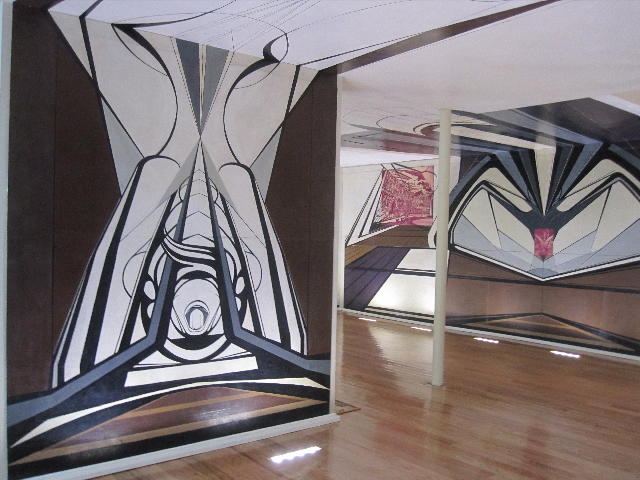
backdrop painting by Celeste Dupuy-Spencer


and a video of MEN's performance found on you tube


The band, left to right, JD Samon, Michael O'Neill and Ginger Brooks Takahashi
you can listen to MEN on their my space page:
http://www.myspace.com/men
facebook.com/pages/MEN/10196687905

Who am I to feel so Free?
Who am I?

MEN is a Brooklyn-based band and art/performance collective that focuses on the energy of live performance and radical potential of dance music. MEN speaks to issues such as wartime economies, sexual compromise, and demanding liberties through lyrical content and an exciting stage show. The group began in 2007 as the DJ/production/remix team of LE TIGRE members JD Samson and Johanna Fateman. When the duo began to write new songs, it made sense to merge their efforts with JD's other new project HIRSUTE. JD and Hirsute members Michael O'Neill (Princess, Ladybug Transistor) and Ginger Brooks Takahashi (LTTR, The Ballet) now comprise the core of MEN, with Johanna and artist Emily Roysdon contributing as writers, consultants, and producers.


MEN
I am a fe-MEN-ist
Sábado 28 de agosto, 13:00 horas
Explanada del Museo Tamayo


MEN
Como parte de la serie VOLUMEN que presenta performances musicales o de artistas contemporáneos que forman parte de grupos musicales, el Museo Tamayo presenta un performance de MEN, una banda de Brooklyn, Nueva York, conformada recientemente en 2007 por JD Samson, Michael O’Neill y Ginger Brooks Takahashi. Además, la editora, música y escritora Johanna Fateman y la artista plástica Emily Roysdon contribuyen de modo constante en distintos procesos del proyecto como consultoras, escritoras y productoras. El colectivo lleva a cabo performances en vivo en los que acostumbran tratar, mediante las letras de sus canciones y elementos que incorporan en las presentaciones, temas vinculados a la economía en tiempos de guerra, la lucha, la demanda y la conciencia por la libertad y la sexualidad. Para su presentación en el Museo Tamayo, MEN realizará un performance en colaboración con un grupo de percusionistas locales que acompañará a la banda, y la artista neoyorquina Celeste Dupuy-Spencer, realizará una pintura mural en vivo durante el performance.

Créditos:
Pinturas, escenografía y vestuario: Celeste-Dupuy Spencer
Colaboración musical: Karina García Soler, Alma Gracia Estrada, Maribel Pedraza Calderón, Gabriela Orta Quintana y Montserrat Revah Lacouture.

Conoce la música y videos de MEN en http://www.myspace.com/men
Otros links
http://www.youtube.com/watch?v=lNpjbV9-VtY
http://www.youtube.com/watch?v=GMInMajng3w
http://www.youtube.com/watch?v=XzPoSCE8AH0

Sobre VOLUMEN
En esta serie el Museo Tamayo busca dar a conocer el trabajo de artistas contemporáneos, quienes forman parte de grupos musicales, ya sea porque esta actividad se integra a su propuesta artística o lo toman como una alternativa al resto de su producción. Volumen es el escenario para conocer estas propuestas musicales contemporáneas a través de presentaciones acústicas, con música de distintos géneros, además de performances como el que ahora realizará MEN.

Sobre el Museo Tamayo
Fundado en 1981 en la Ciudad de México, el Museo Tamayo lleva a cabo innovadoras exposiciones de arte contemporáneo internacional y además exhibe su colección, la cual fue conformada por sus fundadores e incluye obras fundamentales de la segunda mitad del siglo XX hasta el presente. La misión del Museo Tamayo es la colección, presentación y difusión de las más destacadas obras de arte plástico y manifestaciones artísticas contemporáneas a nivel internacional. Su vocación es mostrar arte contemporáneo para generar nuevas experiencias, conocimiento y análisis sobre la diversidad cultural nacional e internacional de nuestro tiempo.
Desde 1986, el Museo Tamayo forma parte de una red nacional de museos que dirige el Instituto Nacional de Bellas Artes (INBA) y recibe apoyo adicional de la Fundación Olga y Rufino Tamayo, A.C. Localizado en un circuito de museos céntrico en la ciudad, como lo es el Bosque de Chapultepec, el Museo Tamayo es un museo privilegiado en términos del arte contemporáneo en México y goza de un gran reconocimiento a nivel internacional.

Museo Tamayo
Reforma y Gandhi s/n
Bosque de Chapultepec
México DF, 11580
www.museotamayo.org
www.rufino.mx

Monday, 6 September 2010

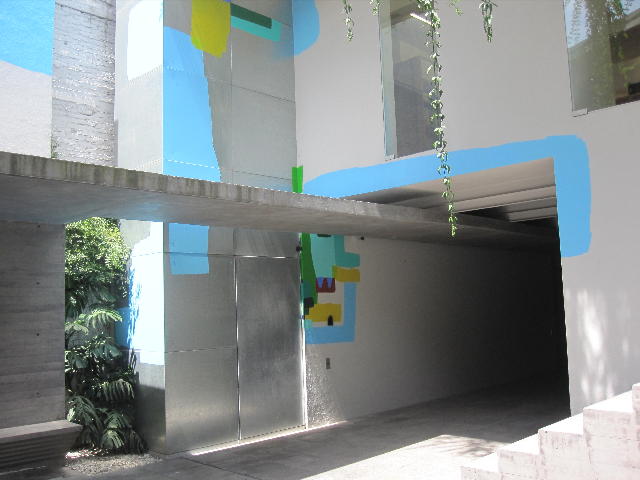
A VISIT TO SALA DE ARTE PUBLICO SIQUEIROS, MEXICO CITY, WITH NEW ARCHITECTONIC INTERVENTION BY CASTILLO/SPRINGALL AND DISPLAY OF SIQUEIROS' MURALS


Utopia sign by Kasper Sonne


David Alfaro Siqueiros
Proyecto “Mural para una escuela del Estado de México”
Laca automotiva sobre novopan, 550 x 795 cm.
1971 - 1973


David Alfaro Siqueiros
Trazos de composición espacial del mural "La marcha de la humanidad"
Acrílico/Carboline, 27.7 x 29.4
1965-1971


original facade of the SAPS in the 70s

Sala de Arte Publico Siqueiros:
http://www.saps-latallera.org

Architects Castillo and Springall:
http://www.arquitectura911sc.com/

Sunday, 5 September 2010

'MALE' AT MAUREEN PALEY, CURATED BY VINCE ALETTI


Peter Hujar, 1970s black and white photographs


Wolfgang Tillmans, necks


Tom and Clement


MALE – an exhibition curated by VINCE ALETTI
4 September — 3 October 2010
private view: Saturday 4th September 6.30 – 8.30 pm

Geoffrey Chadsey, Graham Durward, Peter Hujar, Stephen Irwin,
Patrick Lee, Attila Richard Lukacs, Paul P., Jack Pierson, Gary Schneider,
Wolfgang Tillmans, Scott Treleaven, Karlheinz Weinberger

“Male” is the latest iteration of a series of exhibitions and a book that began as—and to a great extent, remains—a personal way to understand and organise the many representations of masculinity. To some degree, that involves both engaging and undermining stereotypes: the jock, the rebel, the thug, the aesthete, the stud, the pretty boy. Not one version of masculinity, but many variations, gathered here side-by-side for a conversation, an exchange—sometimes reasoned, often heated. What do these guys have to say to one another? And to us?

For me, and for many of the artists gathered here, pictures of men are rarely neutral. Desire, with its potential for drama, always complicates things. The male gaze is often at its most intense when directed at another male, and even a casual look can be charged (Wolfgang Tillmans’ photographs of two passersby seen from the back). Whether romantic, erotic, or some messy combination of the two, the work is far from cool. It’s ardent, obsessed, freaked-out, blissed-out, sexy. Material appropriated from internet hook-up sites (Graham Durward), vintage porn (Stephen Irwin), turn-of-the-century medical records (Gary Schneider), and various, frequently pastiched, printed sources (Paul P., Geoffrey Chadsey, Attila Richard Lukacs) is re-interpreted with a mix of devilish devotion and passionate restraint. The violently disheveled boy from Jack Pierson’s “Self-Portrait” series, the stocky working man and quartet of Puerto Rican brothers who posed in Peter Hujar’s bare East Village studio, the young beauties in Scott Treleaven’s flower-strewn dreamscapes, and the proto-punk dandies Karlheinz Weinberger cultivated in postwar Zurich have nothing and everything in common.

They come together here not to define the concept of maleness but to keep the definition as open and fluid as possible. Masculinity can be a straitjacket, an armour plate, a bad joke. Or it can be loose, light, and vibrant: Something unexpected, something sweet, something wild.

Vince Aletti 2010

Vince Aletti reviews photography exhibitions for the New Yorker’s Goings on About Town section and writes a regular column about photo books for Photograph. He contributes occasional features and reviews to Aperture, Artforum, and Interview. He was the art editor of the Village Voice from 1994 to 2005, and the paper’s photo critic for 20 years. He is the winner of the International Center of Photography’s 2005 Infinity Award in writing.

Aletti wrote half of the 101 brief descriptive essays that form the backbone of Andrew Roth’s The Book of 101 Books: Seminal Photographic Books of the Twentieth Century (2001) and has written introductions to books by Michael Thompson and Ingar Krauss (both 2005), Mark Cohen and Kohei Yoshiyuki (2007), Jed Fielding and Bruce Bellas (Bruce of Los Angeles) (2008), and Ryan McGinley and Joe Szabo (2010). In March of 2002, he co-curated a show of Steven Klein’s fashion photography for the Musee de L’Elysee in Lausanne, Switzerland. Flesh Tones: 100 Years of the Nude, a show of photographs he organised, was at New York’s Robert Mann Gallery in 2003, and he was the curator of a show of work by the art director and photographer Henry Wolf at the Howard Greenberg Gallery in 2005. Male, a show of work from Aletti’s collection travelled from New York’s White Columns to Vancouver’s Presentation House in 2008, followed by the publication of Male, a book of photographs and other artwork from that collection, by Andrew Roth’s PPP Editions.

In 2009, Aletti was the adjunct curator of ICP’s Year of Fashion. During that time, he curated This Is Not a Fashion Photograph, with work from ICP’s collection, and, with Carol Squiers, co-curated Weird Beauty: Fashion Photography Now and Avedon Fashion 1944 – 2000. He and Squiers also contributed essays to the Avedon catalogue, published by Abrams. The Disco Files 1973 – 1978, a collection of Aletti’s weekly columns on disco, was published in spring 2009 by DJhistory in the UK. Aletti was one of four curators chosen for this year’s New York Photo Festival in May.

http://www.maureenpaley.com/

Wednesday, 1 September 2010

'PANAMERICANA' BY JENS HOFFMANN: TROPICAL LANDSCAPES, GOLD COINS, COLONIAL STATUES, AZTEC IDOLS, PYRAMID, OP-PONCHO, CHICHARRON AND PANCHO PANTERA


Federico Herrero, 'Patio', 2010, Acrylic paint


Diego Pérez, 'Esquemas para una oda tropical', 2006, Parking hindrances, plastic bucket, and plants


Mateo López, 'Moneda Panamericana (Pan)', 2010, 20,000 golden chocolate coins


Alexandre Da Cunha, 'Panamericana-flag 1', 2009, Digital print, 400 x 713 cm (157.48 x 280.71 inches)


Beatriz Santiago, 'Esto es un mensaje explosivo', 2010, HD Video, 18:00 min


Juan Araujo, Gio Ponti in Venezuela paintings, 2007-2008


Carla Zaccagnini, 'Sobre la igualdad y las diferencias I: casas gemelas', 2005/2008, Inkjet print on cotton paper


Alessandro Balteo Yazbeck (fragment), 'Pan de azúcar, 1849-2009; (Museographical Version). From the series Modern Entanglements', 2004-2010, Self-adhesive vinyl, pedestal, sweet bread and narrative label


exhibition view, Mariana Castillo, Eduardo Basualdo


exhibition view, Gabriel Sierra, Eduardo Basualdo, Adrian Esparza


Adrian Villar Rojas, in collaboration with César Martins, Alan Legal y Mariano Marsicano, 'The Death Of The General Lavalle (The eternal butterflies)', 2010, Wood, clay, concrete, fosiles, rocks, plastic and glass installation: 450 x 400 x 500 cm (177.17 x 157.48 x 196.85 inches)


Yoan Capote, 'In, Out, Before and After', 2010, Digital print of plastic sheet in light box, 60 x 90 x 13 cm (23.62 x 35.43 x 5.12 inches) each


Mariana Castillo Deball, 'The stronger the light your shadow cuts deeper/Mientras más intensa es la luz están tus sombras más hondo' (from the series "Entre tú y la imagen de ti que a mí llega"), 2010, Paper cut, 300 cm (118.11 inches) diameter


Mariana Castillo Deball, 'Tu movimiento junta una estatua ficticia (de la serie "Entre tú y la imagen de ti que a mí llega")', 2010, Fiber glass sculpture from a cast of the original Catlicue Statue, shown at the Anthropology museum in Mexico City, 250 x 160 x 160 cm (98.43 x 62.99 x 62.99 inches)


exhibition view, Adriana Lara, Juan Capistran


Adriana Lara, 'Indice / Index', 2010, Silkscreen on canvas, 60 x 90 cm (23.62 x 35.43 inches)


Juan Capistran, 'Sympathy for the Devil (Eat the Rich), or 13 Point Program to Destroy America', 2009-2010


Eduardo Basualdo, 'Razón o Fuerza', 2010, Two wooden poles, one light bulb (1,000 watts), one black aluminum screen, one electric motor and one pulley


Gabriel Sierra, 'Untitled (Abstract Elephant)', 2010, Wooden structure 400 x 300 x 9000 cm (157.48 x 118.11 x 3543.31 inches)


Adrian Esparza, 'Here and now', 2010, Wood, nails, wool thread and zarape, 304.8 x 487.7 cm (120 x 192 inches)


Adriana Lara, 'Sin título (Latina (Agustina (Malvina))), 2010, Silkscreen on plastic, 100 x 150 cm (39.37 x 59.06 inches)


Wilfredo Prieto, 'Cuba libre' (remains), 2010, Rum and Coca-cola, Variable dimensions


Cinthya Soto, 'El cruce', 2007,Set of 4 analog C-Print, 101 x 101 cm (39.76 x 39.76 inches)


exhibition views


Panamericana
curated by Jens Hoffmann
From July 14th to September 11th, 2010
open Wednesday - Thursday, 11:00 am - 6:00 pm
Friday - Saturday, 11:00 am - 4:00 pm

Inspired by the 200th anniversary of Latin American independence and the political concept of Pan-Americanism, Panamericana brings together a large number of emerging artists from throughout Latin America.

Its inspiration is historical, but Panamericana is a thoroughly contemporary exhibition, offering a look at a wide range of visual art being produced today. It is also a highly subjective exhibition, formed by the curator’s own experiences in the region, his observations of its cultures, and a personal examination of his own Latin American heritage.

The exhibition looks at the individuals, questions, and issues that are crucial to Latin America’s current cultural and political climate. Panamericana points toward the enormous wealth of, and relevance of, Latin American culture while acknowledging that it is ultimately impossible to offer a single, definite thesis on such an infinite subject.

The participating artists represent a younger generation of Latin American artists who have in recent years begun to contribute significantly to the cultural landscape of their countries and the region as a whole. While there are certainly connections among their forms, materials, and ideas—including the subject of identity, and its fluidity as a concept—these artists from Mexico, Puerto Rico, Argentina, Colombia, Costa Rica, Brazil, Cuba, the United States, and beyond do not represent a single artistic style or a hermetic system of visual communication. One of the objectives of Panamericana, rather, is to bring together these diverse voices and introduce them to one another in order to foster a closer dialogue surrounding the visual arts in Latin America and to make that dialogue visible beyond the region.

The exhibition is curated by Jens Hoffmann, director of the CCA Wattis Institute for Contemporary Arts in San Francisco.

Participating artists:
Adrián Esparza, Adrián Villar Rojas, Adriana Lara , Alessandro Balteo Yazbeck , Alexandre da Cunha , Beatriz Santiago Muñoz, Carla Zaccagnini, Cinthya Soto, Diego Pérez, Eduardo Basualdo Federico Herrero, Gabriel Sierra, Juan Araujo, Juan Capistran, Luis Carlos Hurtado, Marcelo Cidade, Mariana Castillo Deball, Mateo López, Nicolás Paris Vélez, Nuria Montiel, Wilfredo Prieto y Yoan Capote.

kurimanzutto
gob. rafael rebollar 94
col. san miguel chapultepec
11850 méxico df, méxico
t/f (52 55) 52 56 24 08
www.kurimanzutto.com