
Marcelo Krasilcic's 1990s photobook of Marcelo's friends, family, places and lovers during the 1990s


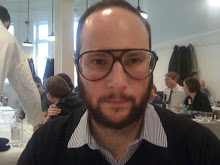
Friends at Shrimpy's for Marcelo Krasilcic's book launch

Marcelo Krasilcic signing his book

Marcelo and Ian Hundley

Pablo Leon de la Barra and Marcelo Krasilcic

horizontal and vertical

the horizontal format book

Marcelo's father

Bernhard and Marcelo

interior in Santos

Marcelo and Mom

aunt and girlfriend

Gisella

Marcelo doing Yoga

and the vertical format one

wall texture and tiles

Dad again

peaches and arrangement

doors and elevators

Adriano when he was young

Havana stretching

tropical interior

Butt scratching

Dudu

Renata

Ellen Cantor

and young Marcelo

doors and elevators

Adriano when he was young

Havana stretching

tropical interior

Butt scratching

Dudu

Renata

Ellen Cantor

and young Marcelo
*****
In 1990 I left a four-year relationship to study photography in New York.
My parents were happy to help me with a fresh start as they thought Luiz was responsible for me being gay. Little did they realize I was moving to the gay capital of the world and soon would be surrounded by gay pride and Act-Up politics.
I was twenty and filled with questions about life and loving. And I dove into schoolwork, trying to learn and understand how much I could communicate through photography.
No too long after I arrived, I saw the most beautiful American blond boy in the mirror of the New York University gym. We checked each other out at the urinals and it felt very special when we started going out. After all Sean was just so handsome and I will never forget how his asshole smelled like peaches. I will also never forget how he broke up with me after two months by not answering his phone or calling me again. We were quite different and even if I wasn’t feeling good about the relationship, I was shocked by how he did it. Some years later, Laura, a friend we had in common, told me Sean was hustling to pay for college, that the older man in whose apartment we spent some nights was not an uncle but a sugar daddy and that ultimately Sean had chosen to cut me out of the whole situation.
During that first year in New York I came across the Gay Pride Parade, which seemed very radical. All those proud gay people and their families, churches and synagogues marching down Fifth Avenue, shamelessly displaying and celebrating their gayness; it was a revelation. I was instantly happily proud to be gay, and shortly after that I started going to act-up meetings and marching in protests. So many people were dying of Aids and the government didn’t care. Street protests were the way we found to demand more medical trials, experimental drugs and money for research. We were all hopeful when Clinton got elected.
I started doing yoga at Jivamukti and traveled to India to study Ashtanga. I did a couple of yoga performances and photographed people forward and back bending.
It felt right to stop eating meat and poultry. Then I went to an Ashram for a few days and had sex quietly at night with another yogi I met there.
The New Museum had a room painted a different chakra color every year for Linda Montano’s Living Art project. Linda, who lectured at my school, gave free tarot consultations to artists in that room. She saw emotional turmoil in the cards and told me to work on my difficulties through photography. I loved it and started to photograph my friends, my family, and the men I slept with.
Nan Goldin was teaching at NYU, and although I didn’t take her class I fell in love with her work. Not so much her belief that what she was portraying was reality but with how real her images looked. And I wanted my photographs to look real.
I was amazed by the objectifying power of a photograph that is so subjective.
I wanted to rewrite my own reality. If I was feeling lonely, then I had photographs of myself with different men to remind me I was not alone. Photos of my friends and family showed how much love I was surrounded by. I was in control of how I was telling my story, but my life was taking its own course.
My senior project at NYU included a nude yoga self-portrait, an intimate photo with my mom and images of François—a guy I met in the Paris metro—and I in bed. Vince Aletti reviewed the show in the Village Voice and he said I was right on target by making the viewers squirm a little. He was very encouraging.
Jack Pierson saw the exhibition and invited me to be part of a group show he was curating at Tom Cugliani’s gallery in SoHo. I was the young one among some amazing artists. I may not have been aware of how incredible it was to be in that group show, but I clearly remember falling in love with Jack when we first met at a café in the West Village. He was so charming and desperately handsome. Next time we met again, I used the word fleeting to describe relationships and he liked that. We were together for a year. We were in love and he showed me so much of his world. He took me to the Grand Canyon, Los Angeles, Las Vegas and to Thanksgiving with his friends.
I started to show at a gallery in Brazil and some of my images were included in a group exhibition of gay artists at the Museu da Imagem e do Som. The newspaper Folha de São Paulo published photos accompanied by an interview about it. My parents were not happy that everyone got to know I was gay from the front page. My aunt Gilda, her girlfriend Jane and their friends clapped when they saw me!
I felt that being out and proud was just the right thing to do. Yet I knew that their generation had to deal with a lot of prejudice and had little choice but to stay in the closet.
My family has been manufacturing furniture for generations and my mom is an interior designer. It felt natural to start taking pictures of living and bedrooms, furniture, stores, anything or place that seemed to have a very specific arrangement. My questions about how much we are in control or otherwise destined seemed clearly illustrated in the images. I was intrigued by the way the rooms and furniture were arranged. Very specific choices were made in each room, but the people who arranged them were also limited by the options they had available. And I understood the limitations as chance.
New magazines in New York and Europe seemed particularly open to the kind of image I was creating. Visionaire, Purple, Self-Service and Dazed & Confused became my playground. Fashion was an excuse to create the reality I believed in, to work with extraordinary people, and a great way to communicate with a larger audience.
Designer Susan Cianciolo and the Bernadette Corporation ruled New York fashion, and I avidly followed and photographed every step they made to be inspired and to breathe in the excitement their creations exhaled.
I photographed the band Everything But the Girl and the images were used for their album cover. It was a worldwide success and it felt amazing to see the cover splashed everywhere. I saw them on the windows of Tower Records on Broadway, on painted billboards in Los Angeles, in Japan and in São Paulo. We had rented a limousine, styled and made them up for the shoot. Yet the images looked very real, like a snapshot of a precious moment, and I was thrilled.
I was traveling all over the world shooting my friends, actors, models, musicians, artists and the people I was in love with. I moved to a sunny loft in the Lower East Side, welcomed two beautiful cats into my life and photographed them all the time.
I went to Paris for fashion week and fell in love with Bernhard. He had dabbled as a porn actor and loved being in front of the camera. We cooked delicious dinners, had sex for days and went to Rio de Janeiro on vacation. I almost moved to Europe to live with him but decided to remain in New York, and we had a turbulent and loving relationship for a year.
My memories are profoundly related to what I was feeling at the time yet photographs have a way of pinpointing specific moments that, when viewed over time, have redefined what I remember. By selecting these images I have chosen to tell a story of being young and searching for love and understanding. It was a time riddled with uncertainty, but to me everything seemed possible.
The decade and century came to an end. Digital photography was around the corner, new Aids therapies helped people live longer and 911 happened. I photographed friends and models in New York. I wanted to say we were here alive and creative. Nobody knew what was coming, but we just couldn’t stop.
*****
press release
Marcelo Krasilcic
1990s
Edited by Cay Sophie Rabinowitz
published by Osmos Books, New York
2013
"How much am I in control of my destiny? That was one of my main questions during the 90’s. At the same time I was in love with the idea that photographs are perceived as reality. By creating images that looked real, I was able to write my own history. If I was feeling lonely, I had intimate images to remind me I was not alone. Photographs of rooms, objects, and the arrangement of furniture represented a balance between choices and chance." - Marcelo Krasilcic
Part of a generation of photographers that includes Juergen Teller and Wolfgang Tillmans, Marcelo Krasilcic moved to New York in 1990. He quickly became known for his spare but erotic photographs of liberated youth, artists, designers and musicians, such as Maurizio Cattelan, Chloë Sevigny and Everything but the Girl – photographs that captured the spirit of the 1990s in situ and the exchange of mainstream and underground culture. Krasilcic went on to forge an international career as a fashion photographer, portraitist and director of art, music and fashion videos.
An oversize, clothbound, slipcased, two-volume publication with the iconic work for which Krasilcic is best known will be launched in conjunction with the exhibition. At more than 300 pages, the book chronicles the photographer’s pioneering casual and intimate aesthetic that continues to inform today's lifestyle and fashion photography.
Marcelo Krasilcic was born in 1969 in São Paulo into an eastern European Jewish family. He studied art and photography at the New York University and yoga at the Jivamukti Center and Patanjali Yoga Shala. Soon after graduating at NYU, he started exhibiting his art work and contributing to the early efforts of magazines such as Purple, Dazed & Confused, Self-Service and Visionaire. Krasilcic’s further contributions to magazines such as Harper’s Bazaar and Vogue Hommes International, as well as album covers for bands such as Everything but the Girl, solidified his influence in the international fashion and portrait industry. Since then, he created campaigns for Nike, Moêt & Chandon and Bergdorf Goodman among many others; and photographed actors and musicians such as Willem Dafoe, Joaquin Phoenix, M.I.A., Caetano Veloso and Drake. Krasilcic’s work has been exhibited at the Institute of Contemporary Art, Boston; at the Centre Pompidou, Paris; the Centro Cultural do Banco do Brasil, Rio de Janeiro and at the Museu de Arte Moderna de São Paulo (MAM-SP). The photographer continues to live in New York, and he travels extensively working in-between the fields of art, portraiture and fashion.
order it here
http://www.artbook.com/9780988340404.html
Marcelo Krasilcic 1990s
Introduction text by Marcelo Krasilcic
In 1990 I left a four-year relationship to study photography in New York.
My parents were happy to help me with a fresh start as they thought Luiz was responsible for me being gay. Little did they realize I was moving to the gay capital of the world and soon would be surrounded by gay pride and Act-Up politics.
I was twenty and filled with questions about life and loving. And I dove into schoolwork, trying to learn and understand how much I could communicate through photography.
No too long after I arrived, I saw the most beautiful American blond boy in the mirror of the New York University gym. We checked each other out at the urinals and it felt very special when we started going out. After all Sean was just so handsome and I will never forget how his asshole smelled like peaches. I will also never forget how he broke up with me after two months by not answering his phone or calling me again. We were quite different and even if I wasn’t feeling good about the relationship, I was shocked by how he did it. Some years later, Laura, a friend we had in common, told me Sean was hustling to pay for college, that the older man in whose apartment we spent some nights was not an uncle but a sugar daddy and that ultimately Sean had chosen to cut me out of the whole situation.
During that first year in New York I came across the Gay Pride Parade, which seemed very radical. All those proud gay people and their families, churches and synagogues marching down Fifth Avenue, shamelessly displaying and celebrating their gayness; it was a revelation. I was instantly happily proud to be gay, and shortly after that I started going to act-up meetings and marching in protests. So many people were dying of Aids and the government didn’t care. Street protests were the way we found to demand more medical trials, experimental drugs and money for research. We were all hopeful when Clinton got elected.
I started doing yoga at Jivamukti and traveled to India to study Ashtanga. I did a couple of yoga performances and photographed people forward and back bending.
It felt right to stop eating meat and poultry. Then I went to an Ashram for a few days and had sex quietly at night with another yogi I met there.
The New Museum had a room painted a different chakra color every year for Linda Montano’s Living Art project. Linda, who lectured at my school, gave free tarot consultations to artists in that room. She saw emotional turmoil in the cards and told me to work on my difficulties through photography. I loved it and started to photograph my friends, my family, and the men I slept with.
Nan Goldin was teaching at NYU, and although I didn’t take her class I fell in love with her work. Not so much her belief that what she was portraying was reality but with how real her images looked. And I wanted my photographs to look real.
I was amazed by the objectifying power of a photograph that is so subjective.
I wanted to rewrite my own reality. If I was feeling lonely, then I had photographs of myself with different men to remind me I was not alone. Photos of my friends and family showed how much love I was surrounded by. I was in control of how I was telling my story, but my life was taking its own course.
My senior project at NYU included a nude yoga self-portrait, an intimate photo with my mom and images of François—a guy I met in the Paris metro—and I in bed. Vince Aletti reviewed the show in the Village Voice and he said I was right on target by making the viewers squirm a little. He was very encouraging.
Jack Pierson saw the exhibition and invited me to be part of a group show he was curating at Tom Cugliani’s gallery in SoHo. I was the young one among some amazing artists. I may not have been aware of how incredible it was to be in that group show, but I clearly remember falling in love with Jack when we first met at a café in the West Village. He was so charming and desperately handsome. Next time we met again, I used the word fleeting to describe relationships and he liked that. We were together for a year. We were in love and he showed me so much of his world. He took me to the Grand Canyon, Los Angeles, Las Vegas and to Thanksgiving with his friends.
I started to show at a gallery in Brazil and some of my images were included in a group exhibition of gay artists at the Museu da Imagem e do Som. The newspaper Folha de São Paulo published photos accompanied by an interview about it. My parents were not happy that everyone got to know I was gay from the front page. My aunt Gilda, her girlfriend Jane and their friends clapped when they saw me!
I felt that being out and proud was just the right thing to do. Yet I knew that their generation had to deal with a lot of prejudice and had little choice but to stay in the closet.
My family has been manufacturing furniture for generations and my mom is an interior designer. It felt natural to start taking pictures of living and bedrooms, furniture, stores, anything or place that seemed to have a very specific arrangement. My questions about how much we are in control or otherwise destined seemed clearly illustrated in the images. I was intrigued by the way the rooms and furniture were arranged. Very specific choices were made in each room, but the people who arranged them were also limited by the options they had available. And I understood the limitations as chance.
New magazines in New York and Europe seemed particularly open to the kind of image I was creating. Visionaire, Purple, Self-Service and Dazed & Confused became my playground. Fashion was an excuse to create the reality I believed in, to work with extraordinary people, and a great way to communicate with a larger audience.
Designer Susan Cianciolo and the Bernadette Corporation ruled New York fashion, and I avidly followed and photographed every step they made to be inspired and to breathe in the excitement their creations exhaled.
I photographed the band Everything But the Girl and the images were used for their album cover. It was a worldwide success and it felt amazing to see the cover splashed everywhere. I saw them on the windows of Tower Records on Broadway, on painted billboards in Los Angeles, in Japan and in São Paulo. We had rented a limousine, styled and made them up for the shoot. Yet the images looked very real, like a snapshot of a precious moment, and I was thrilled.
I was traveling all over the world shooting my friends, actors, models, musicians, artists and the people I was in love with. I moved to a sunny loft in the Lower East Side, welcomed two beautiful cats into my life and photographed them all the time.
I went to Paris for fashion week and fell in love with Bernhard. He had dabbled as a porn actor and loved being in front of the camera. We cooked delicious dinners, had sex for days and went to Rio de Janeiro on vacation. I almost moved to Europe to live with him but decided to remain in New York, and we had a turbulent and loving relationship for a year.
My memories are profoundly related to what I was feeling at the time yet photographs have a way of pinpointing specific moments that, when viewed over time, have redefined what I remember. By selecting these images I have chosen to tell a story of being young and searching for love and understanding. It was a time riddled with uncertainty, but to me everything seemed possible.
The decade and century came to an end. Digital photography was around the corner, new Aids therapies helped people live longer and 911 happened. I photographed friends and models in New York. I wanted to say we were here alive and creative. Nobody knew what was coming, but we just couldn’t stop.
*****
press release
Marcelo Krasilcic
1990s
Edited by Cay Sophie Rabinowitz
published by Osmos Books, New York
2013
"How much am I in control of my destiny? That was one of my main questions during the 90’s. At the same time I was in love with the idea that photographs are perceived as reality. By creating images that looked real, I was able to write my own history. If I was feeling lonely, I had intimate images to remind me I was not alone. Photographs of rooms, objects, and the arrangement of furniture represented a balance between choices and chance." - Marcelo Krasilcic
Part of a generation of photographers that includes Juergen Teller and Wolfgang Tillmans, Marcelo Krasilcic moved to New York in 1990. He quickly became known for his spare but erotic photographs of liberated youth, artists, designers and musicians, such as Maurizio Cattelan, Chloë Sevigny and Everything but the Girl – photographs that captured the spirit of the 1990s in situ and the exchange of mainstream and underground culture. Krasilcic went on to forge an international career as a fashion photographer, portraitist and director of art, music and fashion videos.
An oversize, clothbound, slipcased, two-volume publication with the iconic work for which Krasilcic is best known will be launched in conjunction with the exhibition. At more than 300 pages, the book chronicles the photographer’s pioneering casual and intimate aesthetic that continues to inform today's lifestyle and fashion photography.
Marcelo Krasilcic was born in 1969 in São Paulo into an eastern European Jewish family. He studied art and photography at the New York University and yoga at the Jivamukti Center and Patanjali Yoga Shala. Soon after graduating at NYU, he started exhibiting his art work and contributing to the early efforts of magazines such as Purple, Dazed & Confused, Self-Service and Visionaire. Krasilcic’s further contributions to magazines such as Harper’s Bazaar and Vogue Hommes International, as well as album covers for bands such as Everything but the Girl, solidified his influence in the international fashion and portrait industry. Since then, he created campaigns for Nike, Moêt & Chandon and Bergdorf Goodman among many others; and photographed actors and musicians such as Willem Dafoe, Joaquin Phoenix, M.I.A., Caetano Veloso and Drake. Krasilcic’s work has been exhibited at the Institute of Contemporary Art, Boston; at the Centre Pompidou, Paris; the Centro Cultural do Banco do Brasil, Rio de Janeiro and at the Museu de Arte Moderna de São Paulo (MAM-SP). The photographer continues to live in New York, and he travels extensively working in-between the fields of art, portraiture and fashion.
order it here
http://www.artbook.com/9780988340404.html




 Posts


