
VISÃO DO PARAÍSO: PENSAMENTO SELVAGEM
a proposal curated by Julieta Gonzalez and Pablo Leon de la Barra for ArtRio

ERIKA VERZUTTI, Dino Tropical and Dino Pot, 2012
Galeria Fortes Vilaça

Dino Tropical and Dino Pot welcoming the visitors to quilombo paradise

ERIKA VERZUTTI
Dino Pot, 2012
Concreto
150 x 45 x 45 cm
Galeria Fortes Vilaça

ERIKA VERZUTTI
Dino Tropical, 2012
Concreto e bronze
240 x 15 x 30 cm
Galeria Fortes Vilaça


MANUELA RIBADENEIRA
El arte de navegar (navigation instruments), 2011
Bronze
25 x 8 cm
Casa Triângulo
Concreto e bronze
240 x 15 x 30 cm
Galeria Fortes Vilaça


MANUELA RIBADENEIRA
El arte de navegar (navigation instruments), 2011
Bronze
25 x 8 cm
Casa Triângulo


MANUELA RIBADENEIRA, Horizon Mirror, 2012, Vidro, espelho e latão
and El arte de navegar, 2011, Bronze , 25 x 8 cm
Casa Triângulo


LOTHAR BAUMGARTEN
Sinnlicher Marmor, 1969 and Fauna-Flora, 1970
C. Prints
64.6 x 82.4 cm
Marian Goodman Gallery


XIMENA GARRIDO-LECCA
Tropismos, 2013
Madeira, metal, concreto, luz motorizada
Dimensões variáveis
Garúa Galería

JOÃO MODÉ
Para o silêncio das plantas [projeto], 2011/2012
Guache sobre papel
29 x 42 cm
A Gentil Carioca


THOMAS GLASSFORD
Gota Verde, 2008
Placas de melamina, verniz, vidro, osso, latão e ferragem
Dimensões variáveis
Sicardi Gallery


ADRIANA MINOLITI
Selva, 2012
Acrílico sobre tela
380 x 180 cm
Daniel Abate Galería


SERGIO VEGA
Modernismo Chamánico, 2013
Fotografias e esculturas por Sergio Vega
KaBe Gallery


SERGIO VEGA
Modernismo Chamánico (Brasilia Cathedral as an LP), 2013
Fotografias e esculturas por Sergio Vega
KaBe Gallery


EDUARDO KAC
Pornograms, 1980
Fotografia 49 x 73 cm
Ink jet sobre papel Hahnemühle Fine Art Baryta.
Auto-publicado, impresso em 2010
DocumentArt Gallery


EDUARDO KAC, Porno Poem, 1980

EDUARDO KAC, Manifesto de Arte Pornô, 1982


EDUARDO KAC
Movimento de Arte Pornô, 1982
Intervenção, Praia de Ipanema
P&B, som, 5min
16mm para vídeo
DocumentArt Gallery


DANIEL STEEGMANN MANGRANÉ
Mask, 2012
Folha de ouro sobre folhas diversas
Medidas variáveis
Mendes Wood Gallery


GILDA MANTILLA E RAIMOND CHAVES
Sem Título (Iquitos Metallic Building and Rickshaws), 2012
Vídeo escultura, técnica mista
Dimensões variáveis
Revolver Galería


JUAN ARAUJO
Casa de Vidro 14, 2012
ALI, 2011/2012
Tableau 1, 2011-2012
Óleo sobre madeira
Galeria Luisa Strina


RICARDO ALCAIDE
Intrusion nº7 (Lina Bo Bardi), 2013, 120 x 80 cm
Intrusion nº11 e nº12 (Gio Ponti), 2013, 60 x 40 cm
Tinta acrílica em impressão Inkjet, papel de algodão
Galeria Baró

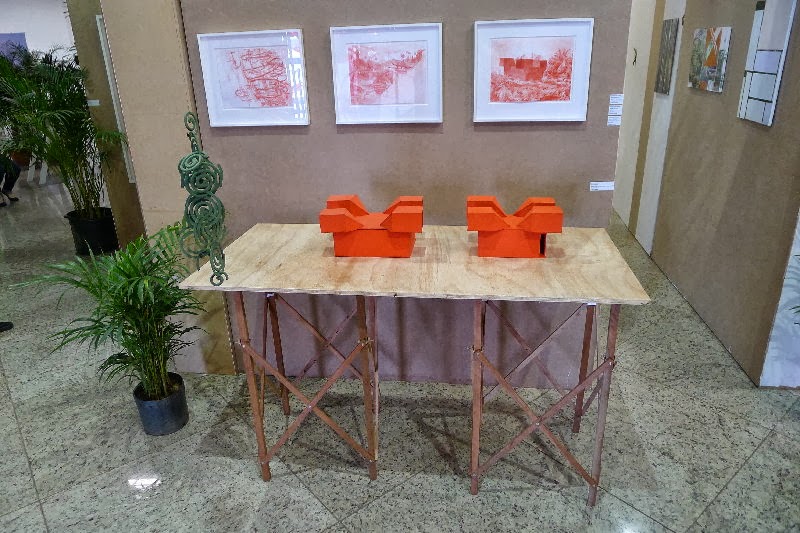

JEAN-PASCAL FLAVIEN
Sliding World, 2005
Moravec Cut, 2004
House + Stero, 2004
Houses
Esculturas e Lápis vermelho em papel
Catherine Bastide Gallery


JOÃO MODÉ
Vanish, 2005
mosquito repellent spirals hanging sculpture
A Gentil Carioca


THOMAS GLASSFORD
Jungala, 2011
Alumínio adonizado, acrílico, tubo polivinil
Dimensões variáveis
Sicardi Gallery


the office for the gallerists, where they could sell the art from their artists in the jungle


THOMAS GLASSFORD
Fuente Doble, 1990
Cabaça, ferragens de metal
30 x 23 x 33 cm
Sicardi Gallery


LAERCIO REDONDO
Paisagem Impressa , 2013
77 bancos com silkscreen sobre plywood
77 livros indicados por colaboradores do projeto
231 x 363 cm
Courtesy of the artist

LAERCIO REDONDO, landscape library, stools and books


HÉLIO MELO
Sem título (Amazonic Paintings), 1990s
Nanquim e pigmentos naturais
Galeria Pilar


CARLA ZACCAGNINI
Museu das Vistas (2004-on going)
Galeria Vermelho
For Museu das Vistas, a police sketch artist makes a landscape drawings based on the verbal descriptions made by the visitor, the visitor in exchange keeps the original drawing, the museum stays with the carbon copy.


landscapes drawn as part of Carla Zaccagnini's Museu das Vistas

and some visitors having lunch in the Museu das Vistas table


MELANIE SMITH
Xilitla paintings, 2010
Nara Roesler Gallery

MELANIE SMITH
Xilitla: Dismantled 1, 2010
Vídeo transferido de 35mm
24'40"
Nara Roesler Gallery


SOPHIE NYS
Coconut ammulets
2013
Emmanuel Hervé Gallery


PEDRO BARATERIO
Conversa, 2013
3 sorrisos, 2013
Tinta da china sobre tela de linho
110 x 150 cm
Galeria Filomena Soares


PEDRO BARATERIO
Planos para a Construção do Paraíso 2010-2013
Lápis de grafite em carvalho revestidos a tinta dourada
Dimensões variáveis
Galeria Filomena Soares

PEDRO BARATERIO
Planos para a des-Construção do Paraíso 2010-2013
Lápis de grafite em carvalho revestidos a tinta dourada
Dimensões variáveis
Galeria Filomena Soares
 and preliminary drawings by Pablo Leon de la Barra
(portuguese)
VISÃO DO PARAÍSO: PENSAMENTO SELVAGEM
a proposal curated by Julieta Gonzalez and Pablo Leon de la Barra
Assim como nos nossos projetos anteriores, nos quais revisitamos os pilares dos temas “tropicais” abordados que falam sobre as especificidades locais do rio de Janeiro e do Brasil, o projeto deste ano é voltado para a irresistível presença da natureza no discurso modernista tropical e após. A natureza é parte integrante do pensamento utópico na América Latina, a partir dos temas edênicos que guiam a exploração e conquista do Novo Mundo até a resistência apresentada pela natureza para processos de modernização que ocorrem na região. Do mesmo modo, a natureza tem estado presente nas imaginações artísticas e arquiteturais de nosso continente, assim como nos artistas que viajaram e visitaram a região através de sua história. As obras proporcionam a reflexão contínua sobre os conflitos, contradições e tensões que afloram no momento em que a “civilização” é implantada no mundo natural.
Através da livre inspiração a partir de várias referências – como Moita, criada no ano passado por OPAVIVARÁ; Jardin d’Hiver [Um jardim de inverno], de Marcel Broodthaers; a mostra singular da exibição de Lina Bo Bardi, além de filmes que captam o poder da natureza e das florestas tropicais, tais como os de Luis Buñuel La mort en ce jardin [A Morte Neste Jardim], de 1956, Aguirre e Fitzcarraldo, de Werner Herzog, Apocalypse Now, de Francis Ford Coppola, baseado no romance Heart of darkness [O Coração das Trevas], de Joseph Conrad, cuja representação da selva na função de catalisadora traz o que há de melhor e de pior nos protagonistas do filme – sugerimos a criação de um jardim com o intuito de exibir as obras. Todos os artistas na seleção lidam com visões do paraíso e utopia intermediada pela natureza, tendo o cenário como uma construção ideológica e as intenções implícitas em sua construção.
(english)
VISION OF PARADISE: THE SAVAGE MIND
a proposal curated by Julieta Gonzalez and Pablo Leon de la Barra
As with our previous projects in which we have revisited the underpinnings of the “tropical” addressing themes that speak to the local specificities of Rio de Janeiro and Brazil, this year’s project addresses the overwhelming presence of nature in tropical modernist discourse and after. Nature is an integral part of utopian thinking in Latin America, from the edenic motifs that guided the exploration and conquest of the New World to the resistance posed by nature to the modernizing processes that took place in the region. Nature has likewise been present in the artistic and architectural imaginations of our continent and those of the artists who have travelled and visited the region throughout its history; their works provide a continued reflection on the conflicts, contradictions, and tensions that arise when civilization is implanted in the natural world.
Taking free inspiration from several references - last year’s Moita created by OPAVIVARÁ, Marcel Broodthaers’ Jardin d’hiver, Lina Bo Bardi’s singular exhibition displays, and films that have captured the power of nature and the tropical forest such as Luis Buñuel’s La Mort en ce Jardin 1956, Werner Herzog’s Aguirre and Fitzcarraldo, Francis Ford Coppola’s Apocalypse Now (based on Joseph Conrad’s novel Heart of Darkness) where the jungle acts as a catalyst to bring out the best and worst in the film’s protagonists – we propose to create a garden in which to display the works. The artists in the selection all deal with visions of paradise and utopia mediated by nature, with landscape as an ideological construct, and the agendas implied in its construction.
Participating Artists and Galleries
Adriana Minoliti, Daniel Abate Galería, Buenos Aires
Carla Zaccagnini,Galeria Vermelho, Sao Paulo
Daniel Steegmann Mangrané, Mendes Wood Dm, Sao Paulo
Eduardo Kac, Document Art Gallery, Buenos Aires
Erika Verzutti, Galeria Fortes Vilaça, Sao Paulo
Helio Melo, Galeria Pilar, Sao Paulo
Jean Pascal Flavien, Galerie Catherine Bastide, Brussels
João Modé, A Gentil Carioca, Rio de Janeiro
Juan Araujo, Galeria Luisa Strina, Sao Paulo
Laercio Redondo, courtesy of the artist
Lothar Baumgarten, Marian Goodman Gallery, New York
Manuela Ribadeneira, Casa Triângulo, Sao Paulo
Melanie Smith, Galeria Nara Roesler, Sao Paulo
Pedro Barateiro, Galeria Filomena Soares, Lisboa
Raimond Chaves & Gilda Mantilla, Revolver Galeria, Lima
Ricardo Alcaide, Baró Galeria, Sao Paulo
Sergio Vega, Kabe Contemporary, Miami
Sophie Nys, Galerie Emmanuel Hervé, Bruselles
Thomas Glassford, Sicardi Gallery, Houston
Ximena Garrido-Lecca, Garúa Galería, Lima
http://www.artrio.art.br/





 Posts


